Seven Counselor Actions for Improving Client Retention in Family Therapy
 The outcome of psychotherapy is mostly dependent on the quality of the human relationship betwixt the therapist and the client.
Whatever course of therapy requires cocky-disclosure from the customer's end and an immense commitment to bringing about the desired change.
Client engagement or handling engagement in psychotherapy is i of the most meaning aspects of the therapeutic process. It reflects the level of healthy zipper a client has with the therapist and straight impacts on the prognosis.
There are multiple identifiers of positive therapeutic engagement, some of which are:
- Regular attendance to the sessions.
- Cocky-disclosure and emotional catharsis.
- Willingness to have awkward conversations.
- Diligent participation in the exercises and activities during therapy.
- Client's perception of the ultimate goals of the treatment.
In this article, we volition take an in-depth look into the core aspects of client date and discuss ways to implement the aforementioned. The following sections shed light on how to internalize the concept of therapeutic involvement and apply information technology in real lives – both as a professional and a help seeker.
Before you continue, we thought you lot might like to download our three Goal Achievement Exercises for free. These detailed, science-based exercises will aid you or your clients create actionable goals and master techniques to create lasting behavior change.
What is Customer Engagement in Psychotherapy? A Definition
In general, appointment refers to the procedure of creating deep connections with clients that drive decisions, interaction, and participation, over time (Temkin, 2008).
Sarah Keenan and other eminent life coaches at the Kingdom of the netherlands Bloorview Kids Rehabilitation Hospital beautifully explained the meaning of client engagement in their splendid video 'Knowledge Connection.'
Their presentation depicts client engagement equally a salubrious mutual connection that entails motivating the customer, sustaining his faith throughout the sessions, and promoting a positive outcome at the end of the class.
In mental health sciences, engagement denotes all the efforts made during therapy, right from the intake sessions, to accomplish the desired results. Information technology is a multifaceted construct with several domains such every bit communication, participation, and exchange of valuable information (Holdsworth, Bowen, Brown, & Howat, 2014).
According to Bowlby (1988), engaging clients from the introductory session and sustaining the involvement all forth is essential for:
- Creating a safety environment for the customer where he can express fearlessly.
- Exploring by achievements and failures that may exist the source of current problems.
- Evaluating the pattern of attachment that the client has with other people in his life.
- Understanding how by relationships might be associated with his present status.
- Modifying thoughts, perceptions, and actions to build positive relationships with his internal and external worlds.
A Expect At The Customer Engagement Model
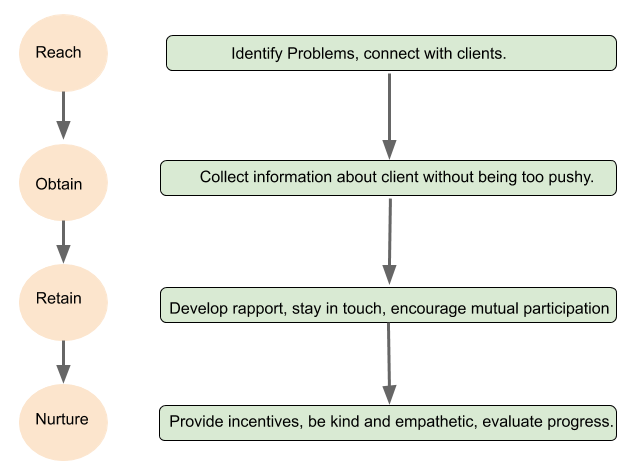
The Client Engagement Model helps usa in understanding the dynamics of therapeutic alliance and how it affects the upshot of therapy. Although it is mainly used in the corporate sectors, the principles of this model hold for therapeutic settings besides.
The Client Date (C.E.) model states that there are two stages of engaging a client into a procedure:
- The Onboarding Stage – Which is all about creating a healthy working relationship that would encourage him to participate actively.
- The Maintenance Phase – Which explores how to keep the client motivated and mindful throughout the sessions right from the showtime.
Each stage of the C.E. model is essential and reflects the differences between starting therapy and sustaining motivation for sessions in progress. The C.Eastward. model (illustrated below) shows how a bones intervention programme can build active cooperation in handling.
How to Engage Clients in Therapy
Carl Rogers was one of the get-go persons who emphasized the importance of engaging a client in therapy. His commodity in the Periodical of Consulting Psychology mentioned that sustaining clients' focus in the counseling sessions require:
- Continuous focus on building a strong alliance.
- Unconditional acceptance and zero judgment.
- Existence empathetic at all times.
- Articulate communication and agile listening.
There is no one-size-fits-all concept when information technology comes to dealing with people and offer solutions to their unique problems (Rogers, 1957). Each ane of us thinks differently, feels differently, and reacts to stress and exhaustion in totally independent ways. Therefore, client appointment in therapy has to follow a highly individualized approach to ensure clients benefit optimally from it.
At the root of successful engagement lies healthy attachment and exchange of positive emotions (Bowlby, 1987, 1988). Whether in an individual or a group session, the level of trust and unconditional positive regard between customer and therapist determines client appointment to a big extent.
Successfully inducing and sustaining interest in therapy requires years of experience and insight. Nigh therapists believe the all-time way to principal the art of customer engagement is to practice it in and out actively.
Hither are some well-known patterns of client engagement that tin can improve the possibility of success in psychotherapy.
Meeting and greeting
While basic as it may sound, beginning and ending the session with warm greetings and goodbyes is an excellent fashion to make the client experience welcome and cared.
Simple words such as 'How are y'all doing today?' or 'How has your day been so far?' are cracking icebreakers for resistant and non-chatty clients.
Confidentiality
Maintaining and respecting the client'south privacy is a prime number concern for therapists in any field. It is natural for clients to gauge if it is safe to share personal information, and even the slightest breach may impairment the process forever.
Therefore, therapists must ensure confidentiality and privacy at all times. They must not mention any information with anyone other than those who are involved with the case.
Using an eclectic arroyo
Clients may often get bored and lose involvement in the therapy, especially if it has been going on for a while. To prevent this, many therapists mix and match their interventions and randomly implement them in the sessions.
Trying new approaches not just make clients experience more excited and curious, but it besides improves the abilities of the therapist himself.
Make a well-planned treatment routine
Discussing the intervention strategy and techniques at the beginning and the end is a proficient step for ensuring customer engagement. It helps the client to understand the road map and take something to look forrard to.
Choose interventions according to the customer's interest
Different individuals take dissimilar areas of involvement and passion. For case, for a travel-lover and nature-lover, using visual imagery of nature during therapy may help in soothing their mind and keep them motivated to participate more in the session.
Learning the clients' likes and dislikes and intelligently incorporating them in therapy goes a long mode in improving handling appointment and event.
Strengthening Client Date Using Quenza
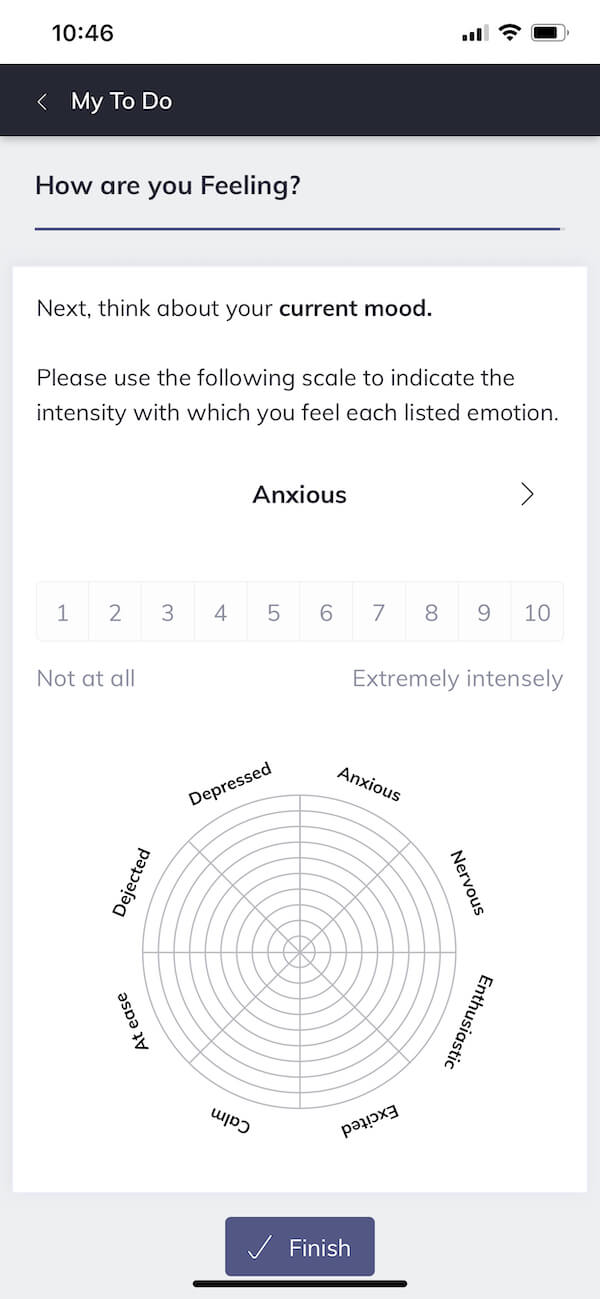 As noted, the best strategies to ensure therapy clients remain highly engaged involve an eclectic approach that keeps them interested in and committed to their interventions.
With the ascension of digital technologies, therapists are finding new and innovative ways to strengthen customer engagement with interventions, not just in the therapy room but between real-time sessions.
For case, using the due east-therapy platform Quenza (pictured here), therapists can invite their clients to consummate a range of self-paced psychoeducational activities that supplement their in-person learning.
Using the platform, therapists tin design reflection exercises, readings, questionnaires, and a range of other activities, all of which clients can consummate at their convenience on their personal devices.
A central advantage of using a digital platform like Quenza to prescribe interventions is that it allows therapists to track their clients' progress from the practitioner'due south end of the app.
Using the service, therapists can fifty-fifty send push notification reminders to their clients' devices to complete activities, helping to go along them engaged and on track to achieving their therapy goals.
If you're interested in learning more about Quenza, check out our dedicated case study commodity exploring the platform'southward applications for delivering psychoeducational interventions. And if you'd like to try the platform for yourself, the service offers a thirty-day trial for just $ane.
2 Client Date Activities
Client engagement is directly associated with positive outcomes for emotional problems, mood disorders, and substance abuse (LeBeau et al., 2013; Orlinsky, Grawe, & Parks, 1994). The virtually reliable indicator of engagement is regular omnipresence to sessions.
Hither are two engagement activities that accept been proven to be useful for handling engagement in adults and adolescents (Wang et al., 2006).
Breathing room
Breathing room is a comfortable space that therapists oftentimes create for their clients. The method is prevalent for adolescents who sometimes struggle to open up and acceptably express their emotions.
In the breathing room, therapists explain why it is okay to take some moments to recollect or do something unrelated to therapy. Information technology tin be annihilation that clients enjoy doing, every bit long as it ensures their wellness and safety.
For example, spending the first few minutes of the session in a coffee shop can be a suitable animate room for some clients. On the other hand, taking a brusque walk with the therapist and doing some small-scale talk can exist the right fashion for helping some clients open up (Shelef, Diamond, Diamond, & Liddle, 2005).
In that location are five steps of using breathing room in psychotherapy:
Pace 1 – Acknowledge the fact that it is hard for clients to open up and share their problems with a stranger in the first place. Be compassionate to their struggles at all times.
Step 2 – Explicate why therapy doesn't have to be on the burrow or in a closed room. Make the discussion easy by asking what the client loves to do during his spare time, or effort to learn about his general interests in life.
Stride 3 – Explain what a breathing room is and allow your client choose 1 for himself. Offering multiple options (for example, sitting in a cafe, taking a short walk, looking through old pictures, etc.) and allow the client to choose what he thinks would be the best.
Step 4 – Engage with the customer completely when you are in the animate room and practise not inquire whatever questions that might make the customer uncomfortable. Once the customer feels gratis and ready in the animate room, come back to the general therapy setting for the rest of the session.
Footstep v – Discuss the importance of being in the animate room and evaluate what areas you can work on improving in the next session.
Music
Music is one common thing that interests all of u.s.a. at some level or the other. It bridges the gap between verbal and nonverbal communication (Slyter, 2012). Using music in therapy is, by far, one of the most reliable and constructive strategies for sustaining client engagement in treatment (Veach & Gladding, 2006).
Here are some ways nosotros can employ music as an active client appointment intervention. It works well for clients of all ages and backgrounds and adds meaning to the therapeutic alliance every bit a whole (Gardstrom, 2004).
Step 1 – Acknowledge the client's struggle and empathize with his difficulty to open up or communicate.
Pace 2 – Talk most music and talk over each other's interests in songs or other forms of music. Make the chat common – be conscientious not to exist pushy, try to make it progress equally a smooth flowing conversation about each others' music interests.
Stride 3 – Once the customer willingly shares his likings, discuss how yous could use music in the therapy sessions.
Step 4 – Innovate ideas such every bit sharing earphones in the session, keeping 5-x minutes per session for music relaxation, singing or playing instruments in one case in a while, etc.
Step 5 – Evaluate the client'southward level of satisfaction later participating in musical interventions and proceed a annotation of their regularity to the sessions.
2 PPTs on Client Appointment
Creating Engagement Strategies – Richard Sedley
Richard Sedley is a well-known author and an expert in the field of corporate client management. His works have been appreciated worldwide and are recognized as the virtually actionable measures on customer engagement in dissimilar occupations.
Although his actions are non explicitly designed for mental health professionals, his slideshow on the basics of the 'what, why, and how' of customer engagement is genuinely insightful and informative.
The presentation comes with relevant inputs on how to start engaging clients and build good for you professional bonds. It covers all aspects of client engagement that tin can be effectively incorporated in the health sciences as well.
Engagement and Relationship Edifice in Integrated Health
This slideshow was created by Dr. Judith Anne DeBonis, a specialist in Social Work at the University of California. It is a vivid compilation of the nuts of customer engagement and shows how information technology influences therapeutic bonds at different levels.
With vivid illustrations and cut-edge descriptions of how therapists and social workers can ensure that clients don't lose motivation, this drove of slides is an excellent resources for getting a strong agreement of date and apply it in exercise.
Define Treatment Date
Handling engagement is about creating a mutually beneficial client-therapist relationship to optimize the purpose of the handling. Whether the customer comes to an outpatient facility or is a residential patient, engaging him in the therapy sessions from day one is a height business concern for all health professionals working with him.
Successful treatment engagement includes:
- Providing a positive, trustworthy, and comfortable surroundings to the client where he feels condom and heard.
- Incorporating effective response procedures – both exact and nonverbal, that can facilitate communication betwixt customer and therapist.
- Preparing and executing well-structured interviews before intake and after the starting time of treatment.
What is Handling Entry and Engagement in Mental Health?
 Some clients are difficult to manage.
For example, adolescents undergoing emotional struggles, trauma victims, and suicidal patients may accept a difficult time letting off their guard and opening up about their distress.
A healthy treatment engagement program in such cases can lead to better prognosis of the psychopathology and help the customer address his issues with more reality orientation. While several factors influence the effectiveness of the engagement plan, one of the well-nigh critical factors is treatment entry.
Studies have shown that the level of engagement that develops in the offset few sessions give the most promising outcomes and sustains until the termination of therapy (Appel et al., 2004).
Treatment date is a purely recovery-oriented process. The sole purpose of engaging hesitant and rigid clients is to make certain they go over their temporary struggles and wait at life from a more positive perspective.
Successful handling date in psychotherapy helps clients in many ways. For case, it allows them to focus on what they want to reach from the therapy and their expectations from the therapist. Information technology also allows them to stride up and decide on their deportment and prioritize tasks accordingly.
On the other hand, reduced engagement in treatment, at any point in the therapy results in degradation of the whole procedure. Individuals with a concluding illness, aged people, or women with postpartum blues are some examples of enervating clients who are challenging to engage.
Treatment Engagement Rating Scale
The Handling Engagement Rating (TER) Scale was initially a Dutch therapy instrument used for treatment engagement of forensic clients. TER is an objective measure out that evaluates client engagement at three levels.
The items of the questionnaire are divided into 9 components, each measuring an aspect of client involvement, and the summation of the scores are aggregated to obtain a final score for handling engagement.
The TER, notwithstanding self-scorable, is a professional person test generally used by therapists to evaluate the positive regard their customer has towards the therapy. Information technology has a high consistent reliability score and is a valid measure out for predicting the level of customer engagement and the overall outcome of the handling.
The TER contains simple questions and is usually administered under professional supervision.
4 Barriers to Treatment Date
 Motivating resistant clients can be challenging for therapists.
In that location are 3 primary sources of barriers to treatment date:
- Less motivation and apathy.
- Situational factors that restrict engagement.
- Lack of variation in handling interventions for different clients.
Barriers to handling appointment tin can come up from both the client and the therapist. Some of the most common impediments to treatment engagement are:
Denial
Deprival results in low motivation and ultimately leads to depression date. Clients frequently fail to accept the severity of their actions and strength themselves to believe that their thoughts and deportment are benign for them (Jackson & Thomas-Peter, 1994).
For example, individuals with acrimony direction and impulse control problems, or sex offenders seeking therapy often fail to see the distortion in their thoughts that led to the bug. Helping them overcome this denial at the early phase of intervention, for example by active communication, cognitive interventions, or other activities, can help in sustaining engagement throughout the sessions (Kennedy & Grubin, 1992).
Negative expectations
Many therapists agree that clients come with unrealistic expectations from the therapist. In some instances, they desire their therapists to solve their issues magically. While in other cases, clients perceive the therapy to be a painful recapitulation of the stressful events that they are trying to get rid of (Garfield, 1994).
Personality factors
We know that treatment engagement is individualized and differs from person to person. Lack of knowledge about the personal disposition of the clients can create a pregnant obstacle in creating and sustaining handling engagement in therapy (Winn, 1996).
For example, victims of domestic and sexual violence, who already have a weak sense of trust and self-esteem, may find information technology hard to open up in group settings in the commencement. Irresolute the intervention plan and execution according to the individual needs is ane of the primary requisites for date in psychotherapy.
Power and control factors
A therapist usually has all the information about his client from the very beginning. But the client comes with minimal knowledge of who he is seeing and how the sessions will exist. This may initially brand some clients feel less convincing; yet, with the right gear up of activities and positive communication, therapists can overcome this bulwark in therapy (Marecek & Kravetz, 1998).
3 Mental Health Date Strategies
The almost popular engagement strategies in mental health are – connection, compliance, and participation. They course the ground of date, and most interventions follow these strategies in 1 style or the other.
Connection
Building a secure connection with the client starts from the very get-go session. It can be formed through communication, active listening, empathy, and mutual trust. Edifice a therapeutic alliance guarantees client interest (Kazantzis, Whittington, & Dattilio, 2010; Morgan & Flora, 2002).
Some heady ways for therapists to establish a therapeutic connection are:
- Offering some minutes for journaling clients' thoughts and feelings after each session.
- Using simple metaphors that the client can relate to.
- Using a positive tone that tin can make the client feel comfortable and heard.
Compliance
Compliance is a certain shot indicator of treatment engagement but can be challenging to accomplish. A corking strategy to enforce the arrangement is by introducing domicile assignments that clients would agree to do at home.
Compliance is a typical appointment strategy in CBT and uses a range of activities that can keep clients engaged even when they are in their personal spaces (Graff et al., 2009). Some examples of compliance activities are:
- Maintaining a daily thought periodical where clients keep a record of their daily activities, thoughts, and emotions.
- Having a slumber journal to evaluate and monitor the quality of sleep.
- Specialized activities such as mood mapping or time-out, can assist clients experiencing emotional and impulse command bug (Baydar, Reid, & Webster‐Stratton, 2003).
Participation
Engagement as participation or involvement is all virtually creating equality and making clients feel as powerful equally the therapist (Dingle et al., 2008). Some strategies to promote customer participation in mental health interventions are:
- Making the treatment plan in collaboration with the client. Therapist and client can sit together to talk over what they expect at termination and decide how to achieve the ultimate goal (Chatzisarantis, Hagger, Smith, & Sage, 2006).
- Engaging in active feedback sessions where both the therapist and the client can openly discuss what they similar almost the sessions and what they would similar to modify (Frankel & Levitt, 2009).
ii Books on Client Engagement in Psychotherapy
 Principles of Trauma Therapy: A Guide to Symptoms, Evaluation, and Treatment – John Briere and Catherine Scott
The Principles of Trauma Therapy is a specialized and rich content on the virtually constructive ways of dealing with astringent cases of trauma and abuse.
The book explores all the dynamics of a healthy client-therapist relationship and talks nigh some slap-up ways to have clients engaged in therapy from twenty-four hour period one.
It is testify-based, focuses on applications, and guides professionals on how to get things done successfully.
Observe the book on Amazon.
 Engagement and Therapeutic Communication in Mental Wellness Nursing – Sandra Walker
Engagement is equally much a business for mental wellness nurses equally for therapists or doctors. This book comes with a plethora of information on how to communicate effectively, reach the clients and enter into their personal spaces, and avert picking up the stress associated with mental health jobs.
The book is specially designed for mental health nurses and is a trustworthy resource that can facilitate professionals at all levels.
Find the volume on Amazon.
A Take-Home Bulletin
According to the famous American author W. Timothy Gallwey, "In every human endeavor, there are two areas of appointment – the outer and the inner."
The dissimilar activities and date strategies we discussed in this article are examples of outer date. The inner engagement takes a deeper dive into creating insight and making clients feel confident and motivated to attend the sessions and meet the goals.
The background of client appointment in psychotherapy is trust and confidentiality. When an individual realizes that he is safe to share his feelings without existence judged, he will naturally feel more inclined to participate actively.
We promise you lot enjoyed reading this article. Don't forget to download our three Goal Achievement Exercises for free.
- Appel, P. Westward., Ellison, A. A., Jansky, H. Yard., & Oldak, R. (2004). Barriers to enrollment in drug abuse treatment and suggestions for reducing them: Opinions of drug injecting street outreach clients and other system stakeholders. The American Journal of Drug and Alcohol Abuse, 30(ane), 129-153.
- Baydar, N., Reid, M. J., & Webster-Stratton, C. (2003). The role of mental wellness factors and programme engagement in the effectiveness of a preventive parenting programme for Caput Start mothers. Child Development, 74(5), 1433-1453.
- Bowlby, J. (1987). Defensive processes in the light of zipper theory. In D. P. Schwartz, J. L. Sacksteder, & Y. Akabane (Eds.), Attachment and the therapeutic procedure: Essays in honor of Otto Allen Volition, Jr., M.D (pp. 63–79). Madison, CT: International Universities Press, Inc.
- Bowlby, J. (1988). Developmental psychiatry comes of historic period. The American Journal of Psychiatry, 145(one), i-ten.
- Chatzisarantis, N. L., Hagger, M. S., Smith, B., & Sage, 50. D. (2006). The influences of intrinsic motivation on execution of social behaviour within the theory of planned behaviour. European Journal of Social Psychology, 36(two), 229-237.
- Dingle, Thousand. A., Gleadhill, 50., & Baker, F. A. (2008). Can music therapy engage patients in group cognitive behaviour therapy for substance corruption treatment? Drug and Alcohol Review, 27(2), 190-196.
- Gardstrom, Due south. (2004). An investigation of meaning in clinical music improvisation with troubled adolescents. Qualitative Inquiries in Music Therapy Monograph Series, ane, 77-160.
- Garfield, South. L. (1994). Research on client variables in psychotherapy. In A. E. Bergin & S. 50. Garfield (Eds.), Handbook of psychotherapy and beliefs change (pp. 190–228). Hoboken, NJ: John Wiley & Sons.
- Graff, F. S., Morgan, T. J., Epstein, East. Eastward., McCrady, B. S., Cook, S. M., Jensen, Northward. K., & Kelly, S. (2009). Engagement and retention in outpatient alcoholism handling for women. American Journal on Addictions, 18(four), 277-288.
- Holdsworth, E., Bowen, Eastward., Chocolate-brown, S., & Howat, D. (2014). Client engagement in psychotherapeutic treatment and associations with client characteristics, therapist characteristics, and treatment factors. Clinical Psychology Review, 34(5), 428-450.
- Jackson, C., & Thomas-Peter, B. A. (1994). Denial in sexual activity offenders: workers' perceptions. Criminal Behaviour and Mental Health, 4(i), 21-32.
- Kazantzis, N., Whittington, C., & Dattilio, F. (2010). Meta‐analysis of homework effects in cognitive and behavioral therapy: A replication and extension. Clinical Psychology: Science and Practise, 17(2), 144-156.
- Kennedy, H. Yard., & Grubin, D. H. (1992). Patterns of deprival in sex activity offenders. Psychological Medicine, 22(1), 191-196.
- LeBeau, R. T., Mischel, E. R., Simpson, H. B., Mataix-Cols, D., Phillips, G. A., Stein, D. J., & Craske, Thou. G. (2013). Preliminary assessment of obsessive-compulsive spectrum disorder scales for DSM-5. Journal of Obsessive-Compulsive and Related Disorders, 2(2), 114-118.
- Marecek, J., & Kravetz, D. (1998). Power and agency in feminist therapy. In I. B. Seu & 1000. C. Heenan (Eds.), Feminism and psychotherapy: Reflections on gimmicky theories and practices (pp. 13-29). London, UK: Sage.
- Morgan, R. D., & Flora, D. B. (2002). Group psychotherapy with incarcerated offenders: A enquiry synthesis. Group Dynamics: Theory, Enquiry, and Exercise, 6(3), 203-218.
- Orlinsky, D. East., Grawe, K., & Parks, B. G. (1994). Procedure and outcome in psychotherapy: Noch einmal. In A. Due east. Bergin & Southward. Fifty. Garfield (Eds.), Handbook of psychotherapy and behavior change (pp. 270–376). Hoboken, NJ: John Wiley & Sons.
- Rogers, C. R. (1957). The necessary and sufficient atmospheric condition of therapeutic personality alter. Journal of Consulting Psychology, 21(two), 95-103.
- Shelef, K., Diamond, G. Grand., Diamond, Chiliad. S., & Liddle, H. A. (2005). Boyish and parent brotherhood and handling outcome in multidimensional family unit therapy. Periodical of Consulting and Clinical Psychology, 73(4), 689-698.
- Slyter, M. (2012). Creative counseling interventions for grieving adolescents. Journal of Inventiveness in Mental Health, seven(1), 17-34.
- Temkin, B. D. (2008). The customer experience journey. Forrester Enquiry. Retrieved from https://www.forrester.com/report/The+Client+Experience+Index+2008/-/Due east-RES45192#
- Veach, Fifty. J., & Gladding, S. T. (2006). Using creative group techniques in loftier schools. The Journal for Specialists in Group Piece of work, 32(ane), 71-81.
- Wang, M. N., Sandberg, J., Zavada, A., Mittal, M., Gosling, A., Rosenberg, T., … & McPheters, J. (2006). "Well-nigh at that place"… Why clients neglect to engage in family therapy: An exploratory report. Contemporary Family Therapy, 28(2), 211-224.
- Winn, M. East. (1996). The strategic and systemic direction of denial in the cognitive/behavioral treatment of sexual offenders. Sexual Abuse: A Journal of Research and Treatment, 8(i), 25-36.
Source: https://positivepsychology.com/client-engagement/
0 Response to "Seven Counselor Actions for Improving Client Retention in Family Therapy"
Post a Comment